
The Ultimate Guide to Playdough Fun: Tips, Tricks, and Activities
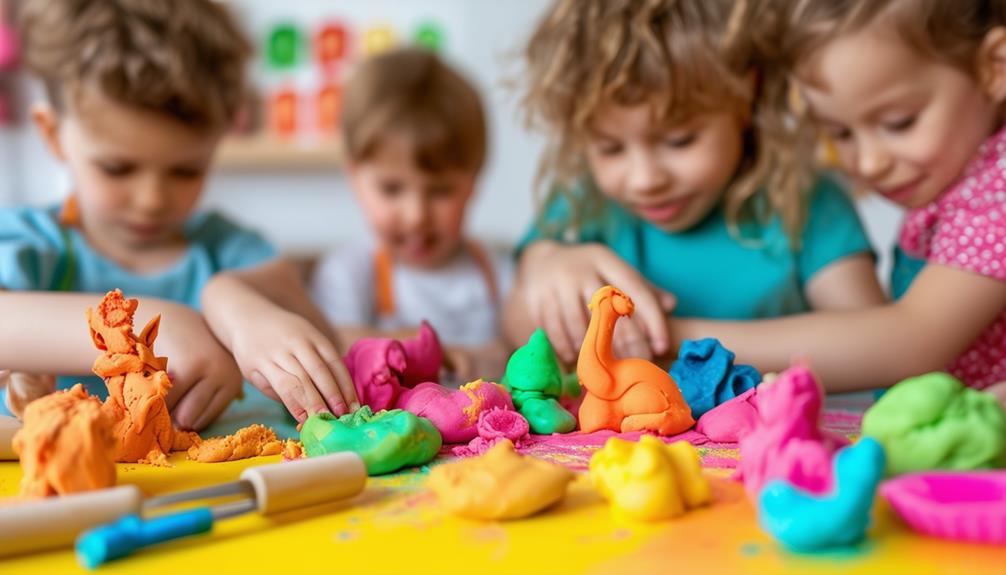
Playdough offers endless joy to both children and adults, but there's much more to explore beyond simple rolling and shaping. In 'The Ultimate Guide to Playdough Fun,' you'll discover tips for making your own affordable playdough, techniques for keeping it fresh, and creative activities that encourage learning and imagination. Imagine transforming a basic playdough session into an educational adventure or a sensory experience. Want to know how to maintain the freshness and excitement of your playdough creations? Let's explore the possibilities together.
Quick Playdough Tips
To make playdough quickly, have all your ingredients ready before you start. You'll need flour, salt, water, oil, cream of tartar, and food dye. Pre-measuring and laying out everything will save you time and make the process smoother.
Start by combining the dry ingredients—flour, salt, and cream of tartar—in a large pot. Next, add the wet ingredients—water and oil. Stir everything together until well mixed. At this point, add a few drops of food dye to create your desired playdough colors. Adding the dye now helps avoid staining your hands later.
Once your mixture is ready, cook it over medium heat, stirring constantly until it thickens and starts to pull away from the sides of the pot, usually 3-5 minutes. Remove the pot from heat, let the dough cool slightly, then knead it until smooth.
Budget-Friendly Playdough
Making budget-friendly playdough is simple using common, affordable ingredients like flour, salt, and cream of tartar. These basics are often already in your kitchen, making it easy to create a fun and versatile playdough without spending much.
To save even more, consider buying food dye in bulk or using less expensive alternatives. Just a few drops can turn plain playdough into vibrant colors that captivate your children's imagination. Engaging your kids in the playdough-making process not only fosters creativity but also keeps costs low. They will love customizing their own colors, scents, and textures!
After making your playdough, store it in an airtight container to extend its lifespan. This reduces waste and ensures your homemade playdough stays fresh and soft, ready for play anytime. This simple step can make a big difference and keep your playdough enjoyable for longer.
Easy Playdough Tricks
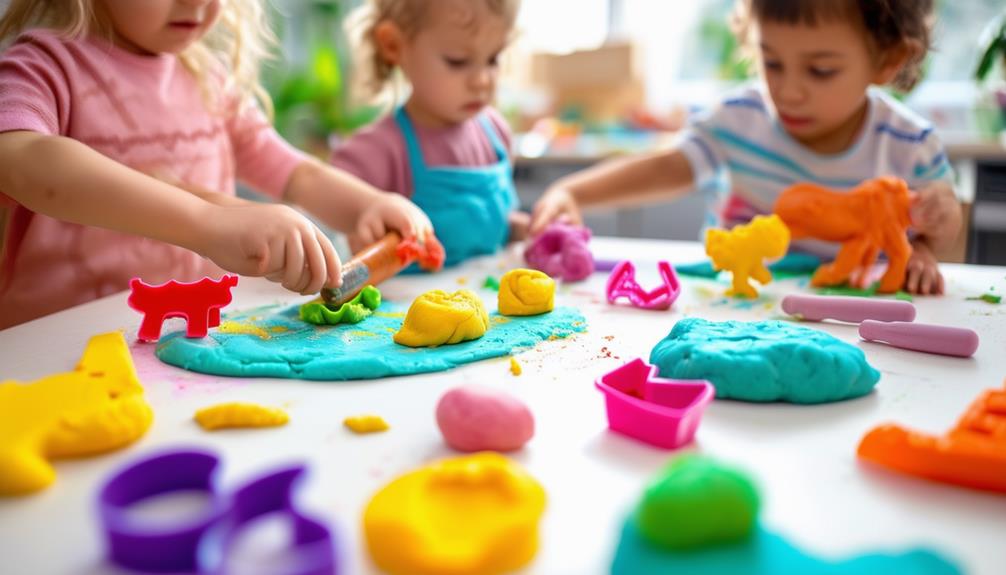
To create the perfect playdough at home, follow these simple tips to ensure optimal texture and enjoyment. Start by thoroughly mixing all dry ingredients before adding any liquids. This ensures even distribution and prevents lumps. If you're using scented ingredients like apple-scented shampoo, you may need to adjust the water content slightly to maintain the right consistency.
Always adhere closely to the recipe to achieve smooth and malleable playdough. Recipes are designed to balance ingredients perfectly, so avoid skipping steps or making substitutions unless you are certain of the outcome. If you don't have wax paper, a paper plate can serve as an effective alternative for kneading the playdough, as it doesn't stick and simplifies cleanup.
Involve children in the kneading process. This not only makes the activity fun and interactive but also promotes bonding and helps develop their motor skills. Let them enjoy getting messy; the process is part of the fun. By following these tips, your homemade playdough will be a hit, providing endless hours of creative play.
Fun and Educational Ideas
Immerse yourself in a world of creativity and learning by incorporating fun and educational activities into your playdough sessions. Sensory play is a fantastic way to engage children, and you can enhance it by adding scents and textures to your playdough. Imagine the joy of mixing a lavender-scented playdough recipe or creating a gritty sand-textured one. These variations not only captivate their senses but also enrich the experience.
Themed playdough activities are another excellent approach. Try making playdough tailored to specific themes, like ocean life with blue, glittery dough, or a construction site with brown, gritty dough. These themes spark imagination and provide focused direction for play. Using playdough mats can further expand the experience, offering interactive and educational scenarios that children can explore with their dough.
Seasonal variations add a festive touch to your sessions. Think pumpkin-scented playdough in the fall or peppermint-scented batches for winter. These seasonal twists keep the excitement alive throughout the year. Additionally, the appeal of neon colors and unique textures can keep things fresh and exciting. By incorporating these ideas, you're not just having fun; you're creating a vibrant, educational experience that kids will love.
DIY Playdough Recipes
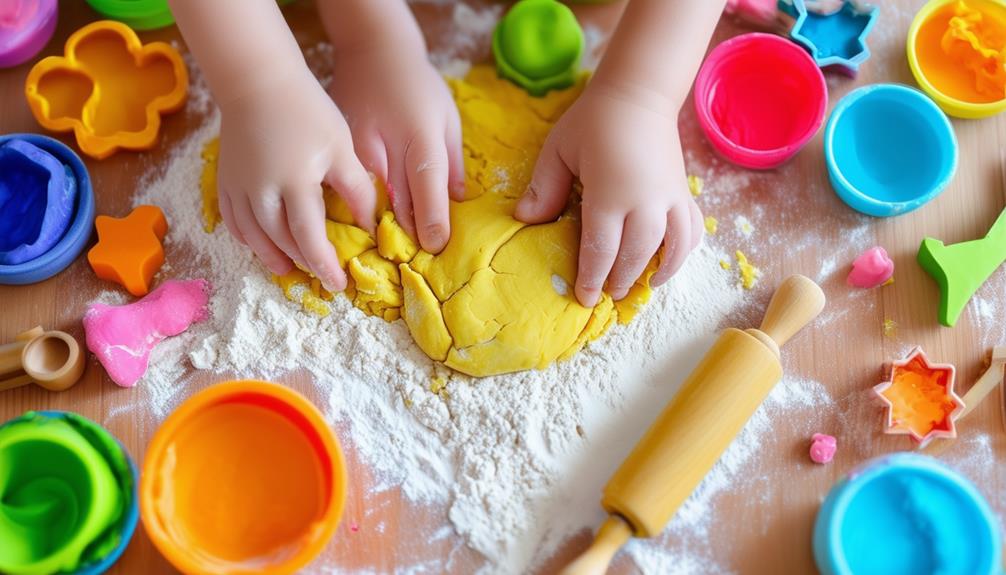
Creating your own playdough at home is a simple and enjoyable way to personalize colors, scents, and textures for endless fun. The basic recipe requires 1 cup of flour, 2 teaspoons of cream of tartar, 1/2 cup of salt, 1 tablespoon of oil, and 1 cup of water. Mix these ingredients in a saucepan over medium heat until the dough forms. You can add food coloring during the mixing process for vibrant colors or essential oils for delightful scents.
For a gluten-free option, substitute the regular flour with gluten-free flour to ensure everyone can join in the fun, regardless of dietary restrictions. If you prefer a no-cook version, combine the dry ingredients in a bowl, add water and oil, then knead until smooth.
Engaging your kids in the playdough-making process can be both educational and fun. Let them measure, pour, and mix the ingredients. It's an excellent way to teach basic math and motor skills. Experiment with different textures by adding glitter, sand, or small beads. Creating playdough at home not only sparks creativity but also serves as a delightful bonding activity for the whole family.
Playdough Storage Tips
Proper storage is essential to keep your playdough fresh and pliable. To maintain its quality, store it in airtight containers. This prevents drying out and preserves texture. For multiple batches, using ziplock bags for each one is effective. These bags keep individual portions fresh and easily accessible.
Here are some tips to prolong the shelf life of your playdough:
- Use airtight containers: These lock in moisture and keep your playdough soft.
- Avoid direct sunlight: Sunlight can cause colors to fade and the playdough to dry out.
- Regularly check consistency: If your playdough starts to dry, add a few drops of oil to restore its pliability.
When stored properly, playdough can last for months, providing endless fun for kids and adults alike. Periodically check and refresh it as needed. By following these tips, you'll ensure your homemade or store-bought playdough remains as delightful as the day you made it.
Playdough Games and Activities
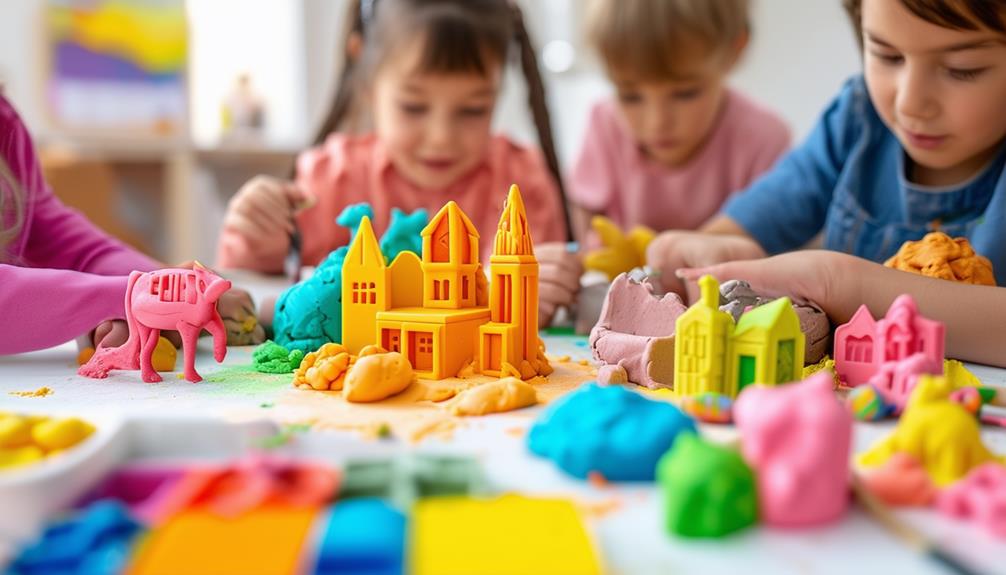
Playdough games and activities provide a wonderful opportunity to engage children's imagination and enhance their learning. These interactive games not only stimulate creativity but also improve communication skills and critical thinking. For example, in 'Guess What I'm Making,' children create Playdough objects for others to guess, earning points for correct answers. This game encourages imaginative thinking and observational skills.
In 'Name that Category,' children are tasked with making Playdough creations within a given category, fostering quick thinking and categorization skills. The 'Create the Word' game is excellent for literacy development, as kids form words using Playdough, aiding in alphabet recognition and cursive writing practice.
Cookie cutters can be a valuable tool in these activities, providing shapes and forms that can inspire creativity. When organizing these activities, it is essential to clearly mark required fields to ensure that each participant understands the rules and objectives.
Here's a quick guide to these games:
| Game | Description |
|---|---|
| Guess What I'm Making | Create a Playdough object for others to guess |
| Name that Category | Make items within a specified category |
| Create the Word | Form words with Playdough for literacy practice |
| Cookie Cutter Fun | Use cookie cutters to shape and inspire creations |
These activities can also be shared via email to keep everyone informed and involved.