How to Store Playdough to Keep It Fresh Longer
To keep Play-Doh fresh for longer, follow these key strategies: Use airtight containers or resealable plastic bags, ensuring you expel any excess air before sealing. Store these containers in a cool, dry place away from direct sunlight or heat sources. Additionally, incorporating moisturizers like lotion or baby oil can help maintain its softness. Curious about how to revive dried Play-Doh or extend its peak condition even further?
Airtight Containers
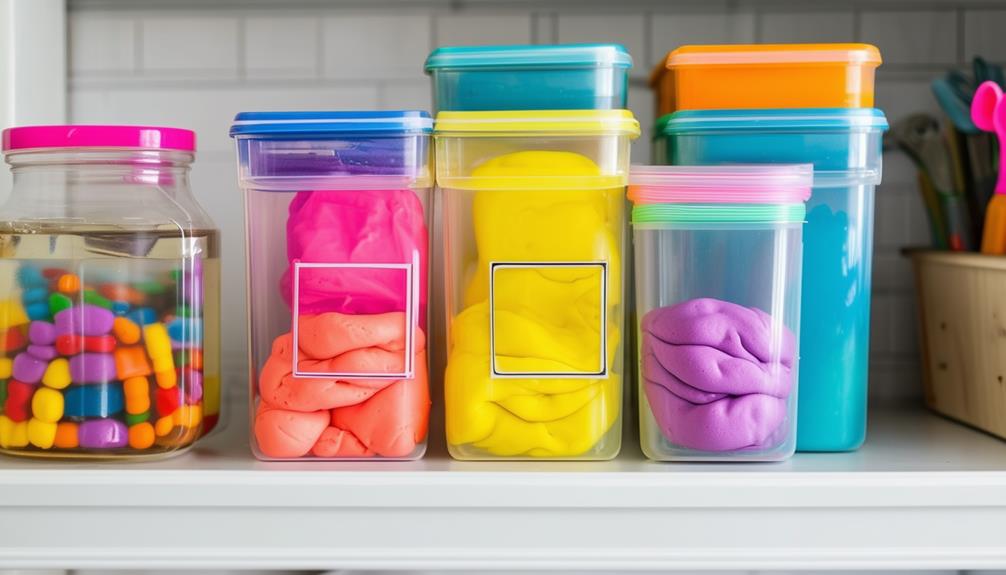
To keep your Play-Doh fresh and pliable, always use airtight containers. These containers prevent air exposure, the main cause of Play-Doh drying out. By using a plastic container with a secure lid, you ensure your Play-Doh stays soft and workable for longer.
Airtight containers feature snap-on lids or ziplock covers that create a tight seal. This seal is essential because even a small amount of air can cause the Play-Doh to harden. Before closing the container, squeeze out any excess air to enhance the seal, thereby preserving the quality and longevity of your Play-Doh.
Plastic containers are particularly useful as they are durable and easy to handle—a perfect choice for kids who might not be as careful with more delicate options. Ensure the lids are properly secured after each use. Consistently using an airtight container maintains the Play-Doh's soft texture, guaranteeing it remains enjoyable to play with every time you open it.
Resealable Plastic Bags
When storing playdough, resealable plastic bags are a convenient and effective solution to keep it fresh. These bags are popular among teachers and parents for their simplicity and effectiveness. By using resealable plastic bags, you can prevent air exposure, which is the primary cause of playdough drying out.
A key advantage of these bags is their ease of use. You can quickly place your playdough inside a bag and seal it, maintaining its softness for extended periods. Resealable plastic bags are also ideal for homemade playdough recipes, ensuring that your creative concoctions remain pliable and enjoyable.
Here are some benefits of using resealable plastic bags for storing playdough:
- Convenient: Easy to use and widely available.
- Effective: Prevents air exposure, keeping playdough fresh.
- Recommended: Often suggested by teachers for storing homemade playdough.
- Space-saving: Takes up minimal storage space.
- Reusable: Can be used multiple times, making them an eco-friendly option.
Removing Air
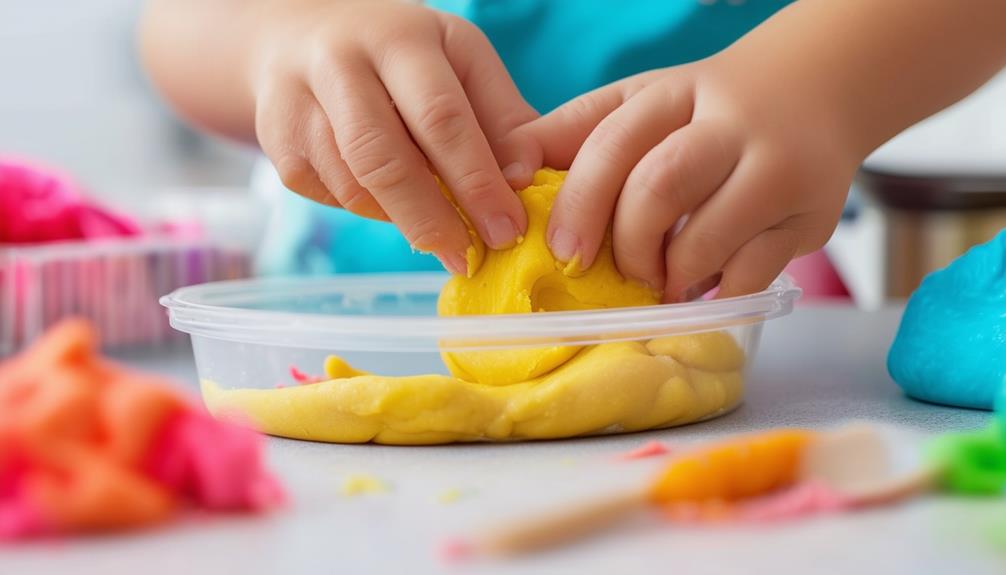
Resealable plastic bags are excellent for storing playdough, but removing air from these containers is crucial for maintaining its freshness. One effective method is to squeeze out as much air as possible before sealing the ziplock bag. This significantly reduces the amount of air that can dry out the playdough, thus preserving its quality.
Another technique is vacuum sealing. If you have a vacuum sealer, use it to extract all the air from the bag. This method is highly effective in keeping the playdough soft and pliable over time. For those without a vacuum sealer, manually pressing out the air and tightly sealing the bag is a good alternative.
For plastic containers with snap-on lids, ensure you press down firmly to create an airtight seal. This prevents air from entering and drying out the playdough. Proper closure is essential for maintaining the playdough's freshness.
Cool, Dry Storage
Storing playdough in a cool, dry place is essential for preserving its longevity and preventing it from drying out. Proper temperature control and humidity prevention are key to maintaining the playdough's texture. Avoid high-moisture areas like bathrooms or kitchens. Instead, select a storage spot that shields it from sunlight, which can cause brittleness and hardening.
Here are some optimal storage practices:
- Airtight containers: Use airtight containers or resealable plastic bags to retain the playdough's moisture.
- Cool cabinets: Store it in a consistently cool and dry cabinet.
- Away from windows: Keep it away from windows to avoid direct sunlight.
- Avoid heat sources: Ensure it is not near heaters or appliances that emit heat.
- Stable environment: Choose a location with consistent temperature and humidity levels.
Adding Moisturizers
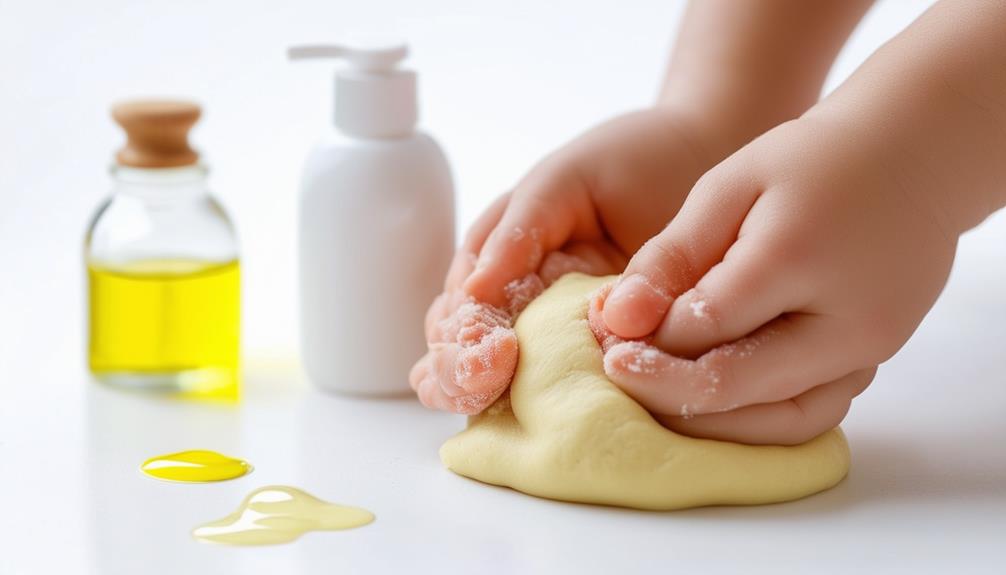
Incorporating a small amount of lotion or baby oil into your playdough can help restore its moisture and flexibility. Kneading a few drops of baby oil or a small dollop of lotion into your playdough is highly effective. This simple action prevents the dough from drying out and becoming hard, allowing for a softer and more pliable texture over time.
Effective lotion brands for playdough include Aveeno, Johnson's Baby Lotion, and budget-friendly options like Suave. These lotions are gentle yet effective in maintaining the playdough's moisture. Regularly using these moisturizers can extend the life of your playdough, making it a worthwhile investment.
For a more hands-on approach, DIY playdough lotion recipes are an excellent choice. Mixing a small amount of coconut oil with a few drops of essential oil creates a fantastic, natural moisturizer. This homemade lotion can be kneaded into the playdough just like store-bought options. By consistently using these moisturizing techniques, you ensure that your playdough remains enjoyable and fun for extended periods.
Reviving Dried Playdough
Reviving dried playdough can be simple with the right techniques and a bit of patience. If you find your playdough has dried out, don't worry. There are quick fixes and slower methods that can bring it back to life. Start by adding a few drops of water to the dried playdough. Knead the moisture into it until it becomes pliable again. This is one of the most effective and child-friendly techniques.
For a slower method, wrap the dried playdough in a damp paper towel and place it in an airtight container. Let it sit for a few hours or overnight, then check its softness. Severe drying may require more effort, but it is not impossible to restore your playdough's texture.
Here's a step-by-step guide:
- Add a few drops of water: Start small and gradually increase.
- Knead the playdough: Work the moisture in evenly.
- Wrap in a damp paper towel: Helps in slow revival.
- Store in an airtight container: Prevents further drying.
- Check after a few hours: Repeat the process if needed.
If your efforts don't fully restore the original texture, consider using DIY playdough recipes to make fresh batches.