How to Fix Dry or Crumbly Playdough
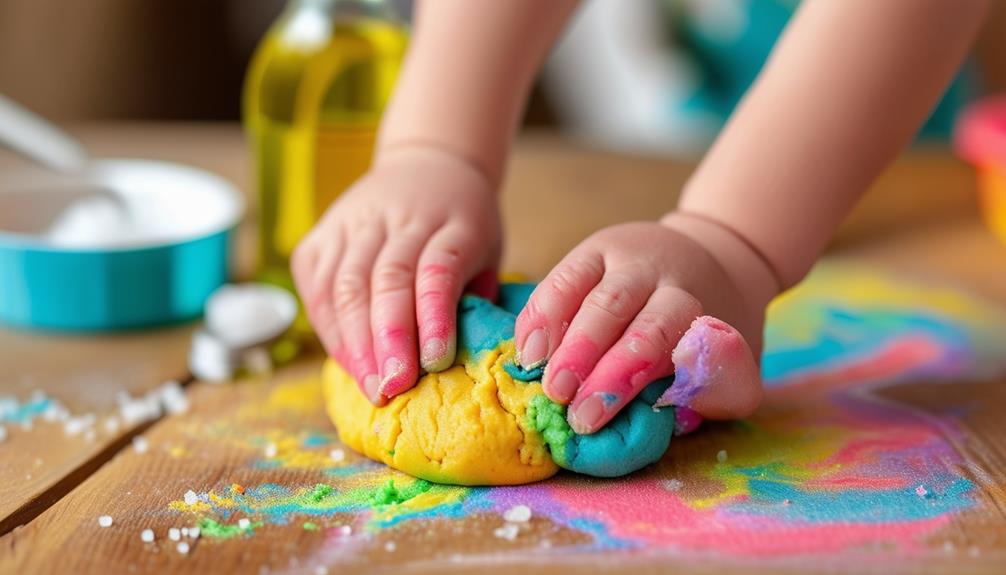
Reviving dry or crumbly playdough can be frustrating, but several effective methods can help. First, assess the texture and look for cracks to determine the extent of dryness. Gradually add small amounts of water while kneading thoroughly. Alternatively, consider using heat or glycerin to restore moisture and elasticity. Before proceeding, ensure the playdough is safe to use. Let's explore these methods to bring your playdough back to life.
Understanding Playdough Dryness
Playdough dries out when it loses moisture due to exposure to air. This loss of water content results in the playdough becoming crumbly and less enjoyable to use. Understanding this process is essential for preventing and remedying it.
To keep your playdough from drying out, store it in airtight containers. This simple step can greatly extend its lifespan by minimizing its contact with air. If your playdough has dried out, don't worry; there are ways to restore its original texture and usability.
Before attempting to rejuvenate dried playdough, check it for any signs of mold or unusual odors, which could indicate it is no longer safe to use. Once you've confirmed it's still good, you can start the rejuvenation process. Gradually add water while kneading the playdough thoroughly to rehydrate it. For added softness and elasticity, consider incorporating a bit of glycerin. This will improve the playdough's pliability, making it almost as good as new.
Assessing the Damage
Begin by examining the texture of your playdough to determine if it is dry or crumbly. Look for signs such as cracks, stiffness, or difficulty in molding. This assessment will help you decide whether the playdough is still usable or if it needs to be discarded. Understanding the extent of dryness will guide you in selecting the most effective method for restoration.
Determine Dryness Level
To determine the dryness level of playdough, gently press it and check for cracks or a crumbly texture. If it feels hard and breaks apart easily, it is likely dried out. Break the playdough into smaller pieces to gauge the severity of the dryness and understand how much moisture is needed to restore its pliability.
Next, observe whether the dryness is uniform or confined to specific areas. If only certain spots are dry, focus your rehydration efforts on those areas. Gently crumbling the playdough in your hands will make it easier to rehydrate later.
Knowing the extent of dryness will help you choose the best method for rehydration. For slightly dry playdough, a small amount of water might be enough. For more severely dried playdough, a more thorough rehydration process will be necessary. Breaking it into smaller pieces will allow it to absorb moisture more effectively.
Inspect for Mold
Before attempting to rehydrate playdough, it's crucial to inspect it for mold or unusual odors. First, closely examine the playdough's surface for any dark spots, fuzzy patches, or discoloration. Mold can manifest in various colors, including white, green, black, or pink. If you detect any mold, discard the playdough immediately to avoid health risks.
Next, smell the playdough. A sour or musty odor suggests contamination, making the playdough unsafe for rehydration. Contaminated playdough poses potential health hazards, especially for children who might accidentally ingest it.
Thoroughly evaluating the playdough's condition is essential for safety. By checking for mold and unusual odors, you ensure that only safe playdough is considered for rehydration. If you have any doubts, it's best to discard the playdough to ensure safety.
Evaluate Usability
Evaluating the usability of dry or crumbly playdough involves examining its texture and condition to determine if it can be salvaged. Start by checking for signs of mold or unusual odors. If either is present, discard the playdough to avoid potential health risks. Next, assess the dryness level. Extremely hard or dried-out playdough may be beyond repair.
For playdough that isn't too far gone, divide it into manageable batches for easier rehydration and a more even restoration. Lightly dry playdough may need just a few drops of water kneaded in, while moderately dry batches might benefit from being wrapped in a damp cloth and left to sit for a while.
Adding Water
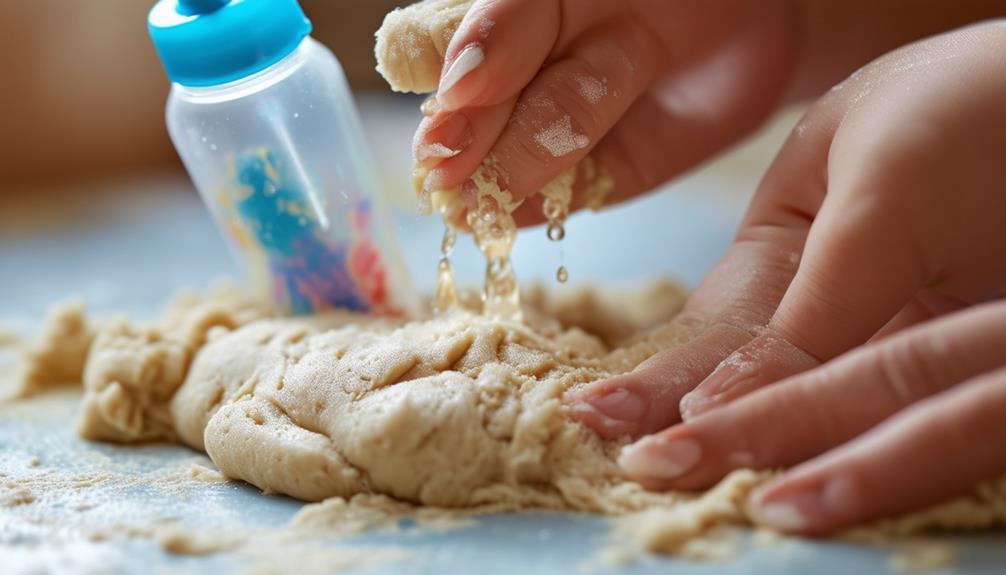
Begin by gradually adding small amounts of water to your dry playdough to restore its moisture. Knead the dough thoroughly after each addition to ensure the water is evenly distributed. If the dough becomes too sticky, adjust the consistency by mixing in a bit of flour.
Gradual Water Addition
To restore moisture and softness to your slightly dry playdough, try gradually adding water. Begin by sprinkling a few drops of water onto the playdough, being careful not to add too much at once. Small increments help prevent making the playdough overly sticky, which can be difficult to fix.
As you add water, knead the dough lightly to assess how it absorbs the moisture. This step allows you to monitor the playdough's consistency. If it still feels dry, add a bit more water and knead again. Repeat this process until you achieve the desired softness.
If you accidentally add too much water and the playdough becomes sticky, simply sprinkle a bit of flour to balance out the moisture. Adjusting the consistency is about finding the perfect balance. This gradual method ensures your playdough remains pliable and fun to use without becoming a sticky mess.
Thorough Kneading Process
Once you've added the water, knead the playdough thoroughly to ensure the moisture is evenly distributed. This process is crucial for reviving the playdough's texture, making it soft and pliable again. Add water slowly to avoid making the playdough too sticky. As you knead, you may notice the consistency changing.
During the kneading process, follow these steps:
| Step | Action | Result |
|---|---|---|
| 1 | Add a few drops of water | Initial hydration |
| 2 | Knead thoroughly | Even moisture distribution |
| 3 | Add more water if needed | Adjust consistency |
| 4 | Continue kneading | Achieve desired softness |
If the playdough remains dry, continue adding water in small amounts, kneading thoroughly each time. If it becomes too sticky, sprinkle a bit of flour and knead until you reach the right balance. Repeat this process until the playdough is soft and pliable, ensuring consistent texture throughout. Thorough kneading is key to ensuring every part of the playdough is evenly moistened, preventing any dry or crumbly sections. Keep kneading, and you'll soon have perfectly soft playdough ready for use.
Using Heat
Heating can effectively restore moisture to greatly hardened playdough. Begin by placing your playdough in a microwave-safe bowl and cover it with a damp paper towel to prevent further drying. Heat it in the microwave for short intervals, around 10-15 seconds, to avoid melting. After each interval, check the texture and knead gently to distribute the moisture and heat evenly, making it softer and more pliable.
Alternatively, you can use steam. Wrap the playdough in aluminum foil and place it over a pot of boiling water for a few minutes. The steam will penetrate the playdough, restoring its moisture content. After steaming, knead thoroughly to ensure even distribution of the added moisture.
Throughout this process, monitor the temperature closely. Overheating can cause the playdough to melt or become too sticky. By carefully applying heat and kneading, you can restore the playdough to its original soft state, ready for creative use.
Adding Glycerin
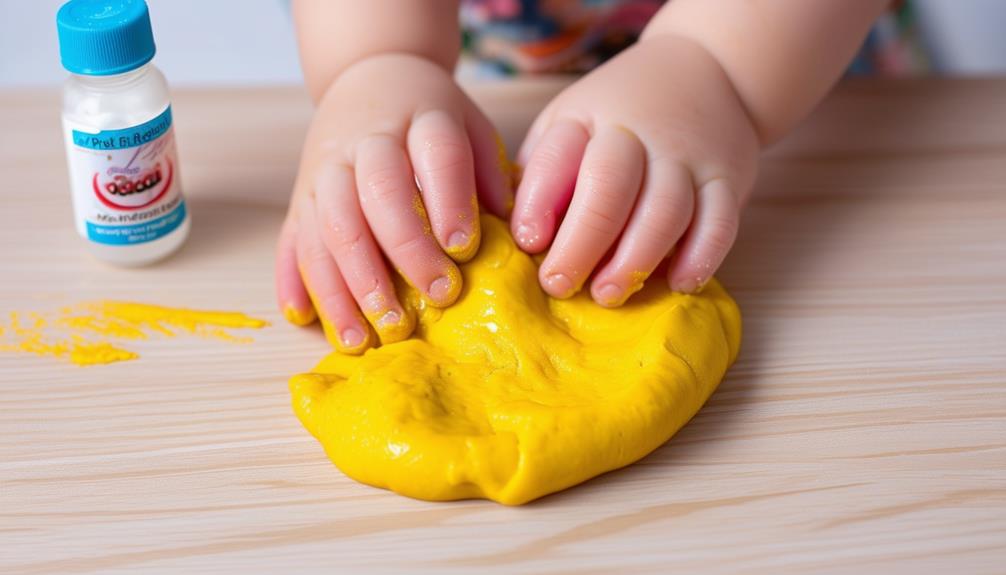
Adding glycerin can effectively restore your playdough's softness and elasticity. If your Play-Doh has become dry, glycerin is a potent ingredient that can rejuvenate it. Start by adding just a few drops to the dry playdough. You don't need much—begin with a small amount to avoid over-saturating the dough.
After adding the glycerin, knead the playdough thoroughly. Proper mixing ensures that the glycerin penetrates and softens the entire mass. As you knead, you'll notice the dough becoming more pliable and less crumbly. If it's still not soft enough, you can gradually add more glycerin, one drop at a time, until you achieve the desired texture.
Storing Playdough Properly
Proper storage of playdough involves using airtight containers or plastic bags to maintain its moisture and usability. To prevent your playdough from drying out, store it in a cool, dry place, away from direct sunlight and heat sources. Exposure to sunlight and heat can cause the playdough to lose moisture quickly, resulting in a crumbly texture.
Regularly check your playdough for signs of dryness. If you notice it starting to dry out, knead it to redistribute any remaining moisture. This simple action can help extend the lifespan of your playdough, keeping it soft and pliable for creative use.
Paper Towel Soak
If your playdough is starting to dry out despite proper storage, a moist paper towel soak can help restore its moisture. This method involves wrapping the dried playdough in a damp paper towel and placing it in a container overnight. The moisture from the paper towel will gradually soften the playdough, making it pliable and enjoyable to use again.
To effectively use the moist paper towel soak, follow these steps:
- Moisten a Paper Towel: Dampen a paper towel with water, ensuring it is not dripping wet.
- Wrap the Playdough: Completely wrap the dried playdough in the damp paper towel.
- Place in a Container: Put the wrapped playdough in an airtight container to retain the moisture.
- Leave Overnight: Allow the playdough to sit overnight so it has sufficient time to absorb the moisture.
- Check Periodically: In the morning, check the playdough. If it's not soft enough, repeat the process for a few more hours.
This method is particularly effective for slightly dried-out playdough that needs gentle rehydration. By checking the playdough periodically, you can ensure it reaches the desired softness without becoming too wet or sticky.
Ziploc Soak
To revive dried Play-Doh, break it into small pieces and place them in a Ziploc bag. Smaller pieces rehydrate more evenly, which is essential for the process. Once the pieces are in the bag, lightly dampen them with just a few drops of water to avoid over-saturation. Seal the Ziploc bag tightly to retain moisture.
Next, massage the Play-Doh pieces through the bag to distribute the water evenly and initiate the rehydration process. You'll notice the pieces gradually clumping together. After massaging, let the bag sit overnight to allow the Play-Doh to fully absorb the moisture, ensuring it becomes soft and pliable by morning.
The Ziploc soak method is a convenient, mess-free solution for reviving dried Play-Doh. It saves time and effort, making it easier to restore Play-Doh to a workable state while keeping your hands clean. By following these steps, you'll have rehydrated Play-Doh ready for creative play in no time.
Microwave Method
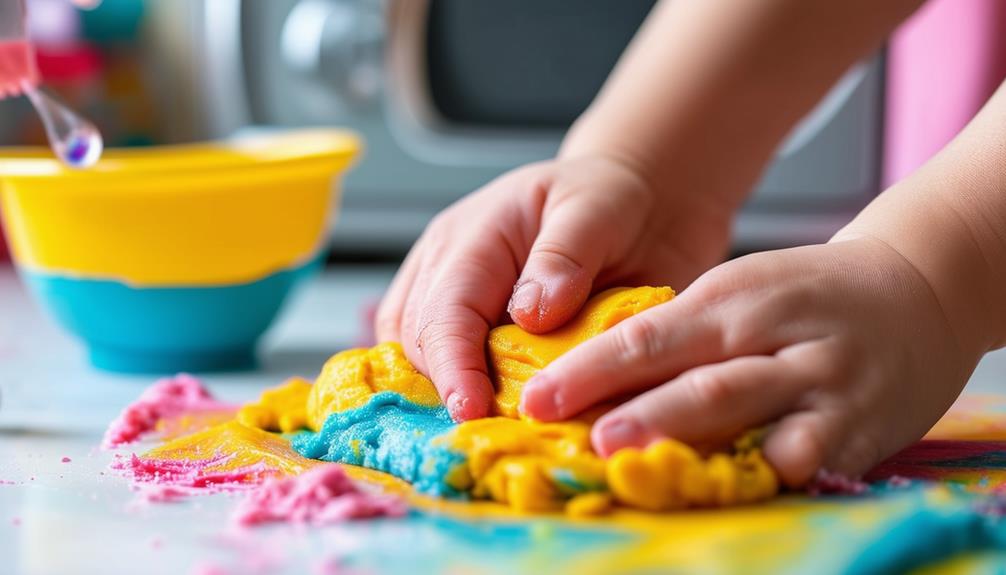
To revive your dry or crumbly playdough, use the microwave method. Heat it in short intervals to soften it without causing damage. Monitor closely and follow moisture retention tips for optimal results.
Short Heating Intervals
Revive your dry or crumbly playdough by microwaving it in short 5-10 second intervals. This technique effectively softens the playdough without overheating it. Begin by placing the playdough in a microwave-safe container. Then, microwave it in 5-10 second increments. After each interval, take it out and knead it to distribute the heat evenly. Using short bursts of heat prevents the playdough from melting, which can occur if microwaved for too long. Keep a close eye on it to ensure you achieve the desired consistency.
Here's how to do it:
- Place the playdough in a microwave-safe container.
- Heat in brief 5-10 second intervals.
- Check and knead after each interval.
- Continue until the playdough is soft.
- Avoid prolonged heating to prevent melting.
This quick technique helps restore your playdough's original texture efficiently. By following these steps, you'll ensure your playdough remains usable and enjoyable for longer periods. Remember, short heating intervals and continuous monitoring are crucial.
Moisture Retention Tips
To retain the moisture of your playdough, try microwaving it with a moist paper towel. This method effectively rehydrates dry or crumbly playdough. Begin by wrapping your playdough in a damp paper towel to prevent it from overheating and possibly melting. Place the wrapped playdough in a microwave-safe dish.
Heat the playdough in short bursts, typically 10 to 15 seconds. After each interval, check its texture. You want the playdough to soften without becoming too warm, as overheating can make it sticky or cause it to melt. The moisture from the paper towel will help rehydrate the playdough.
Once it has softened, remove the playdough from the microwave. Carefully unwrap it and knead it to distribute the moisture evenly, making it pliable again. Repeat the heating intervals and kneading as needed until the playdough reaches the desired consistency.
Steaming Playdough
Steaming playdough is an effective method for reviving dried-out dough. This technique uses steam to rehydrate and soften the playdough gently, reducing the risk of overheating or melting. It is particularly useful for dough that has become very hard and lost its elasticity.
Steps for Steaming Playdough:
- Wrap in Aluminum Foil: Encase the playdough in aluminum foil to ensure even steam distribution and prevent direct contact with water.
- Place in Steamer Basket: Position the wrapped dough in a steamer basket above boiling water.
- Monitor Closely: Keep an eye on the process to avoid excessive moisture, which can make the dough overly sticky.
- Inspect and Knead: After steaming, knead the dough to restore its texture.
- Repeat if Necessary: If needed, steam the dough again to achieve the desired consistency.
This gentle steaming method is both efficient and easy, making it a reliable way to rejuvenate your playdough. Always supervise the process to ensure the dough reaches the perfect consistency.